


Blog / Bishop Toyota Service

How to Jump Start Your Toyota

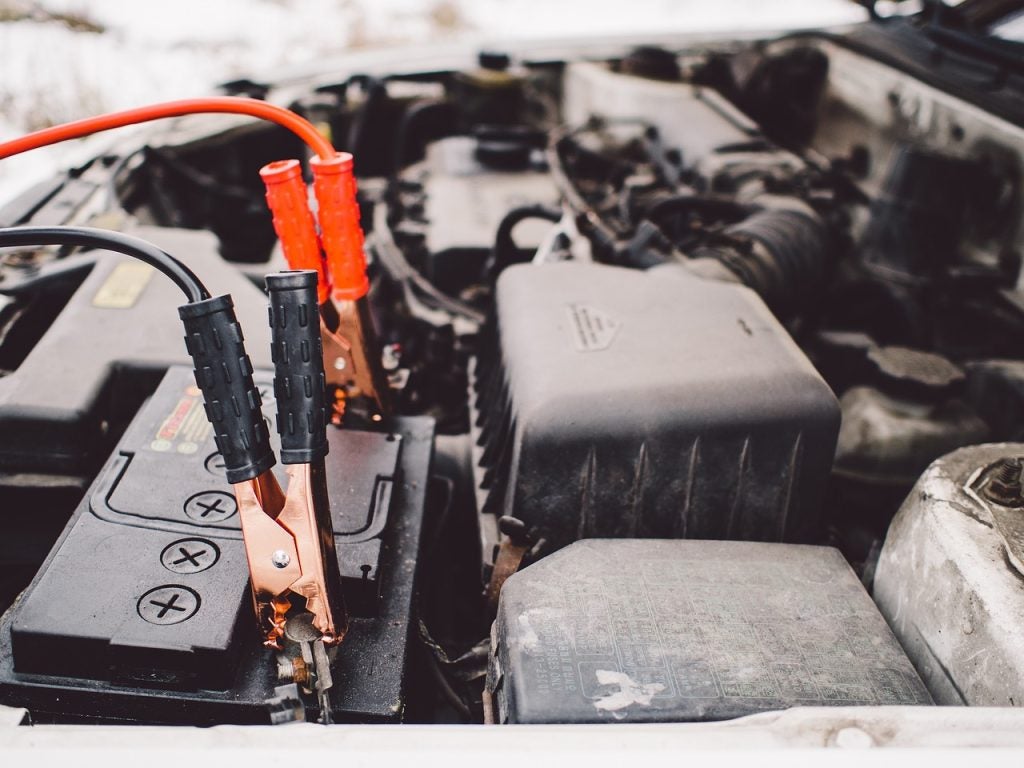
Jumper cables being used to jump start a Toyota in Bishop, CA

Every driver needs to know how to jump-start a car. It might seem like a complicated process, but as your Toyota dealer, we'd like to tell you the way to jump-start like a pro. In this example, your Toyota will have a healthy battery and will be used to jump the other car's battery. Before we begin, the only item you need is a set of jumper cables. Always keep a set in your trunk just in case they're needed.

Park Close

This might seem obvious, but it can be easy to overlook when you're preparing for a jump-start. The cables attach to the battery terminals by clamps, and the closer the vehicles are to each other, the less likely it is for a clamp to accidentally loosen.

Find the Terminals

It's important to identify the terminals correctly before you start. The terminals may be marked with a + and a - sign to show the positive and negative terminals. It's also possible that the positive terminal may have a red plastic cover on it. In addition, most car batteries are located in the front​​​​​​​​​​​​​​​​, but some vehicles have the engine and the battery in the rear.

Positive Then Negative

Jumper cables consist of a red cable, which is positive, and a black negative cable. The clamps on each end of the cables are used to connect them to the two vehicles. The cables must be connected in a specific order for safety and to ensure that the current easily travels from your battery to the dead battery.

Red First

Connect one end of the red cable to the positive terminal on the dead battery. Once the clamp is securely attached, connect the second clamp to the positive terminal on your battery. When you're connecting the cables, make sure that the black and red cables don't touch each other.

Next, take one end of the black cable and connect it to the negative terminal on your battery. Finally, connect the remaining clamp to any unpolished metal surface in the other vehicle's engine compartment.

Start Your Engine

Now the cables are in place, return to your car and start the engine. Allow the engine to idle for a few minutes, then go to the other car and try and start it. If the other car starts, you can now begin removing the cables.

if the other car doesn't start, idle your engine for another ten to fifteen minutes and try to start the other car again. Once the engine starts, all that's left to do is to remove the cables in the reverse order of how you connected them.

Congratulations! You've just mastered the art of jump-starting! If you'd like to know more, visit us at Perry Motors Toyota in Bishop, CA.


Posted in:

Related Posts

Mechanic doing wheel alignment

Toyota Wheel Alignment Indicators Every Driver Should Recognize

Wheel alignment refers to the angle and direction your tires are at and how they’re actually making contact with the road. When those angles are thrown off, whether from trailblazing, hitting a pothole, or going over a speed bump too fast, the wheels can misalign. That means your Toyota starts working harder than it should on your everyday drives around Bishop, California. Recognizing Toyota tire alignment indicators early can save you money on tires, improve your fuel efficiency, and help keep you safe behind the wheel. Your Steering Wheel Is Pulling to One Side One of the most noticeable signs that your Toyota’s tire s need alignment is a steering wheel that drifts left or right when you let go on a flat, straight road. You should n’t have to constantly correct your steering to drive in a straight line. If you notice this happening, it’s time to have your alignment checked by a qualified Toyota technician. Beyond the difficulty it causes in handling, a vehicle that pulls to one side is also a safety concern. It can affect your ability to respond quickly in unexpected driving situations, especially on mountain roads like those around Bishop. Uneven Tread Wear Patterns on Your Tires Uneven tire wear Toyota service technicians often catch first is another key alignment indicator. Healthy tires wear down at roughly the same rate across the entire tread surface. When alignment is off, certain sections of the tire carry more load than they should. You might notice that the inside or outside edges of your tires are wearing down faster than the center. Toyota service technicians are designed to diagnose and correct this uneven wear before it causes a tire to fail prematurely. Checking your tread regularly by looking at each tire from the front is a simple habit worth building. A Crooked Steering Wheel When Driving Straight If your steering wheel looks tilted or off-center while you’re driving in a straight line, it’s another common sign that your Toyota’s tire alignment needs to be serviced. The wheel should sit level when your vehicle is moving forward without any input from you. This symptom often shows up after hitting a pothole, curb, or other road hazard, like mentioned before. Even a minor impact can shift your alignment enough to cause noticeable handling changes over time. Vibration Through the Steering Wheel or Seat Steering wheel vibration while driving at highway speeds can sometimes point to an alignment issue, though it may also indicate a tire balancing problem. Either way, it’s not something to ignore. When alignment is significantly off, your tires can develop irregular wear patterns that create vibration you feel through the wheel or even the floor of your vehicle. On top of that, your Toyota has to put in extra work to just drive straight—and that takes energy. So fuel economy can suffer significantly if you let alignment issues go too long. A Toyota service appointment can help pinpoint whether the cause is alignment, balance, or both so the right correction is made. Visit Perry Motors Toyota for a Tire Alignment Inspection Staying alert to Toyota tire alignment indicators like steering pull, uneven tread patterns, and an off-center steering wheel can help you get ahead of more costly repairs. If your Toyota is showing any of these signs, do not wait to have it checked. Drivers throughout Bishop, CA can schedule a tire alignment inspection at Perry Motors Toyota to keep their vehicle riding smoothly and handling the way it was designed to.

A red Toyota Highlander

5 Reasons to Service Your Toyota at Your Toyota Dealership

Going for a service is an essential part of being a car owner, as you can maintain, fix, and diagnose issues with your vehicle. However, it does pose the question, should you visit an independent garage or head back to your Toyota dealers h ip for your service? Here are five service benefits you can expect to receive when visiting your Toyota car dealership. 1. Use of Genuine Toyota Parts When you service your car at a Toyota car dealership, there is a guarantee that any parts or fluids that need replacing will be swapped out for genuine Toyota products. These parts and fluids will be manufacturer-approved, and made specifically for the model they are being used in. This will ensure they fit properly and will continue to operate safely and efficiently for a long time after the service. 2. Engineer Expertise In an independent garage, the engineers are likely to be generalists, often having a knowledge of how to operate on cars from a lot of different manufacturers. At a Toyota garage, the engineers will be specialists, with an in-depth understanding of how Toyota cars operate and run. This knowledge will also help them to diagnose problems that another engineer may fail to spot. 3. Service Records When you get your car serviced at the Toyota garage, it will be recorded in the database with the rest of your maintenance checks and services. This will provide an accurate picture of how your car has performed over time, as well as highlighting any issues that the engineers need to look out for. Having your services on record can also help you when it comes to selling your car. 4. Updating Software Most modern cars are reliant on software, whether it be for operating safety features, driver assistance, or the infotainment system. Toyota cars are no different, and will require maintenance checks to make sure all software is up to date. At a Toyota car dealership, the engineers will be able to perform these software checkups as part of your overall service. 5. Peace of Mind Getting your car serviced at an official Toyota garage will offer you peace of mind that your car is being operated on to a high standard. Toyota has built up a reputation for its commitment to quality and creating a positive customer experience. There is no guarantee that an independent garage can offer the same level of care and attention toward your Toyota vehicle. When you're planning on getting your Toyota serviced, you'll be met with plenty of options to consider. However, if you want the best expertise, use of manufacturer approved parts, and peace of mind, you'll be best served at a Toyota car dealership. Contact Perry Motors Toyota in Bishop, CA today to schedule your next service. Image via Toyota

A white Toyota RAV4

Essential Maintenance Tips: When to Service Your Toyota

Your Toyota requires regular services to keep it working at peak performance, and the required services are detailed in your car handbook. Sometimes, maintenance must be performed sooner than recommended due to driving conditions or excessive wear and tear on components. As your Toyota dealership, we'd like to give you some examples of essential Toyota maintenance we provide and the recommended mileage for replacement. Image via Toyota Coolant Replacement Healthy coolant is vital for your engine, as it removes heat. The engine generates large amounts of the due to combustion, which must be removed to prevent damage to sensitive components like seals and gaskets. The coolant moves through your engine at high speed, absorbing heat as it goes, and transports the heat to the radiator, where it's removed by heat exchange. Coolant becomes less effective as it ages, and this will cause the engine temperature to rise. It usually requires replacement every 30,000 miles, but the correct replacement time for your Toyota is listed in your car manual. We'll drain and replace the coolant, and your engine temperature will drop to normal operating levels. Windshield Wiper Blades The windshield wiper blades are made from high-quality rubber. They're tough but flexible enough to clean the glass and gentle enough not to damage it. As time passes, the rubber will degrade due to UV rays, heat, cold, and rain. Older rubber loses flexibility, and this will cause it to crack instead of bend, and parts of the blades can break off. Blades usually need replacement every six months to one year, depending on their condition. Broken blades are less effective at keeping the windshield clean, leaving dirty patches behind and smearing the windshield. They can also scratch the glass, which can easily develop into a crack. Damaged blades can be quickly and inexpensively replaced, and the clear view will make driving safe again. Engine Air Filter Replacement The engine air filter traps dirt, dust, and other debris, preventing it from reaching your engine. The filter is housed in a small box inside the radiator grille, and air passes into it as you drive. The concertina-like filter's folds will eventually become clogged with dirt, greatly reducing the amount of air that can reach the engine. Combustion requires air and fuel and turns fuel-rich without sufficient air. This caused excessive wear on the spark plugs and can cause misfiring, or your Toyota could stall. In addition, most of the fuel used for combustion can't burn due to lack of air and is dumped out the tailpipe, reducing fuel efficiency. This filter is usually changed every 30,000 to 45,000 miles, depending on your model. If you'd like to know more about essential maintenance or to book a service, contact us at Perry Motors Toyota in Bishop, CA.